The Science of Reading - Why Readigo Works
The Science of Reading is decades of research - cognitive science, classroom studies, brain imaging - showing how kids actually learn to read. It puts phonics, phonemic awareness, fluency, vocabulary, and comprehension at the center of instruction, not guessing words from pictures. Readigo turns that research into daily practice at home.
What is the Science of Reading?
Over fifty years of research from cognitive psychology, neuroscience, and linguistics on how the brain learns to read. The verdict is clear: reading isn't a natural skill like speech. It has to be taught - through phonics, oral reading, and immediate feedback. Readigo is built on those principles.
The five pillars of literacy (National Reading Panel, 2000)
A US government panel reviewed 100,000+ studies and named five pillars every effective reading program needs. Readigo trains all five.
Phonemic Awareness
Hearing the individual sounds in spoken words. Readigo catches which sound your kid stumbles on and gives targeted practice.
Phonics
The link between letters and sounds. Igo flags words your kid hasn't decoded automatically yet and asks them to say it again.
Fluency
Reading with accuracy, smoothness, and expression. Samuels' Method of Repeated Readings (1979) is the engine behind how Igo structures sessions.
Vocabulary
The bigger the word bank, the better the comprehension. Readigo's library is tiered so kids meet new words at the right level.
Comprehension
Making sense of what was read. At higher levels Readigo moves past pronunciation into short comprehension prompts.
Why Readigo aligns with structured literacy
Structured literacy is the approach the International Dyslexia Association (IDA) recommends as the gold standard. Hallmarks: systematic sequencing, explicit letter-sound instruction, cumulative review, and immediate corrective feedback. Readigo follows the same logic. Your kid reads aloud, gets a precise prompt on each word they miss, repeats it, and the skill becomes automatic. No guessing from pictures. No passive cartoons.
The four reading metrics we measure (and why)
These aren't arbitrary numbers. Each one directly predicts early-grade reading success - backed by 40+ years of research.

Accuracy
Is each word said correctly? Readigo compares what your kid says to the text and catches mispronunciations, skipped words, and extras. Accuracy is the foundation of every other reading skill - the National Reading Panel (2000) names it as a top predictor of comprehension.
→ Your kid reads "house" as "horse" - Readigo flags it and shows the right word.

Fluency
Does reading sound smooth? Fluency tracks whether your kid reads in natural phrases instead of one word at a time. Samuels (1979) showed in his Method of Repeated Readings that fluency is the bridge between decoding words and understanding what they mean.
→ "The… cat… sat…" - Readigo sees choppy reading and suggests phrase-level practice.

Pacing
Are they reading at a natural speed? Too fast usually means rushing. Too slow means they're still sounding words out letter by letter. Readigo compares against words-correct-per-minute benchmarks used by reading specialists.
→ 100 words per minute in 2nd grade is normal. 40 is a signal they need more practice.

Clarity
Can every word be understood? Clarity looks at how well your kid articulates - whether their speech is distinct enough to score. Clean articulation is part of Ehri's Phases of Reading Development, where kids move from letter-by-letter decoding to confident, full-word reading.
→ "Th" sounds like "F" - Readigo catches it and suggests articulation drills.
How Readigo aligns with structured literacy
Your kid reads aloud, Readigo captures the audio and runs it through speech feedback built specifically for kids' voices. Children's vocal tracts are shorter and their speech patterns differ from adults, so standard speech recognition doesn't cut it.
Every session produces scores on all four metrics - accuracy, fluency, pacing, clarity. These map onto four of the five pillars from the National Reading Panel (2000): phonics, phonemic awareness, fluency, and vocabulary. Difficulty adjusts on its own, in line with Ehri's Phases of Reading Development: little ones practice sounds and words, early-grade kids work on fluency, older kids work on expression and comprehension. Structured literacy, delivered as daily practice - phonics-grounded, sequenced, explicit.
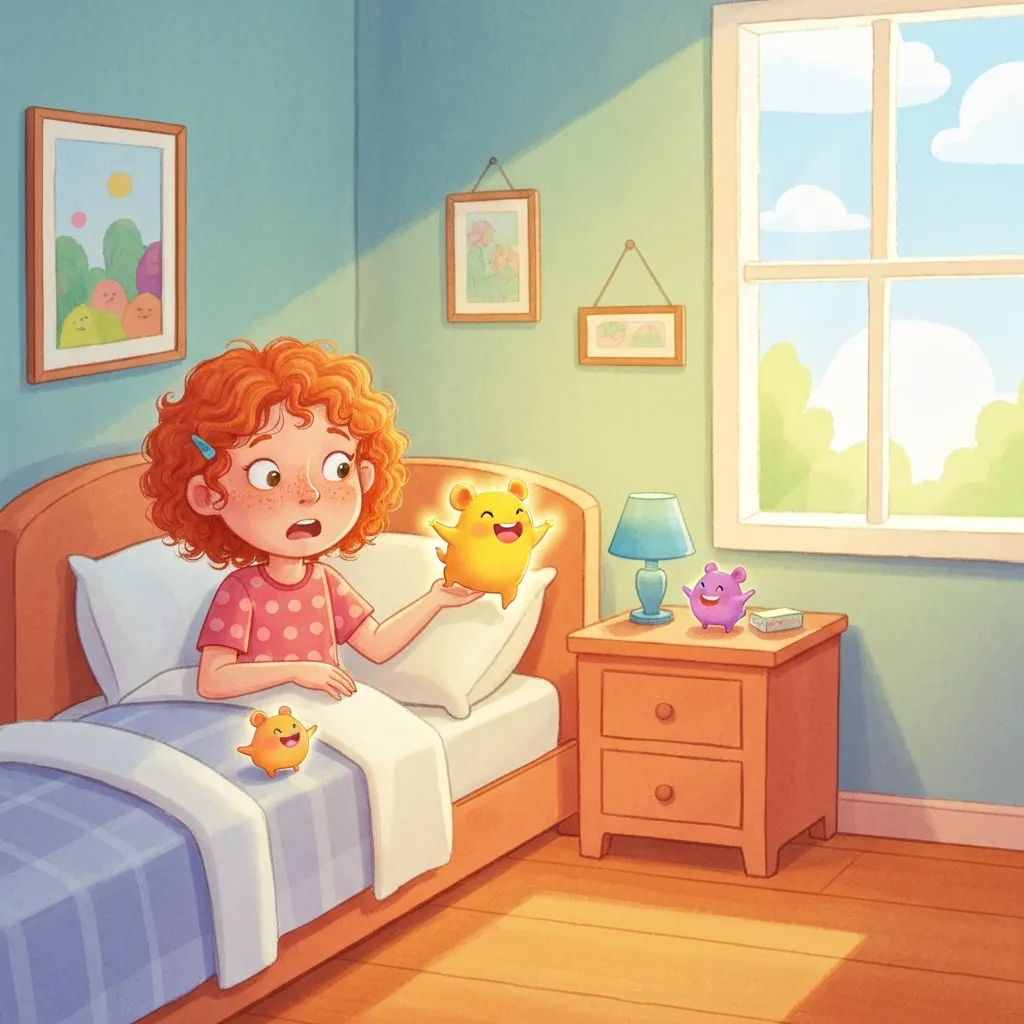

Lily opened her eyes and couldn't believe it. Tiny glowing creatures were dancing on her pillow.
Here's what the in-app score looks like - Readigo highlights the words your kid stumbled on, the same way a reading specialist would mark a running record.
Privacy
We Don't Store Your Kid's Voice
Audio is processed in the cloud and deleted right after scoring. No recordings kept. No voice profiles. Ever.
Research
Why Reading Aloud with Feedback Is Critical
of 4th graders read below basic proficiency
of poor 1st-grade readers stay poor readers in 4th grade
more likely to drop out if not reading by 3rd grade
Where the numbers come from
National Reading Panel (2000) - US Government report↗
Reviewed 100,000+ studies and meta-analyzed the strongest. Identified the five pillars of literacy and confirmed oral reading with feedback as one of the most effective ways to build fluency.
Samuels (1979) - The Method of Repeated Readings↗
Classic study: repeated oral reading of the same passage builds fluency that transfers to new texts. The core mechanic behind how Igo structures sessions.
Stanovich (1986) - Matthew Effects in Reading↗
Kids who read well, read more - and the gap between strong and weak readers grows every year. Early feedback is what breaks the cycle.
NAEP - National Assessment of Educational Progress (2024)↗
69% of US 4th graders read below basic proficiency. The case for early intervention writes itself.
Why phonics-grounded coaching beats passive reading apps
The research is consistent: phonics-grounded instruction plus oral reading practice with corrective feedback gets the best results for early readers. The National Reading Panel (2000) found that explicit, systematic phonics significantly improves children's reading skills. Samuels (1979) showed that rereading a passage aloud until it flows carries over: each new passage starts faster and with fewer errors. Stanovich (1986) named the Matthew Effect - kids who get strong early reading practice pull ahead, kids who don't fall further behind every year. Apps where kids tap, swipe, and watch animations skip the part that actually matters: the kid speaking, being heard, and getting feedback word by word.
Readigo puts that approach in your pocket. Instead of waiting for a tutoring slot or asking a tired parent to listen, your kid practices with a patient reading tutor that's always there and follows structured literacy.
“In 3 weeks Max went from sounding-out syllables to reading with real intonation. What his teacher kept saying for months - finally happened.”
Readigo was built with primary-school teachers and speech therapists.
Common questions about the Science of Reading
What is the Science of Reading?
Over fifty years of research from cognitive psychology, neuroscience, and linguistics on how children learn to read. The National Reading Panel (2000) distilled it into five pillars: phonemic awareness, phonics, fluency, vocabulary, and comprehension. Effective instruction is explicit and systematic - not guessing from pictures.
Does Readigo use the Science of Reading?
Yes. Readigo is built on structured literacy - the same approach the International Dyslexia Association recommends. Your kid reads aloud, Igo flags each missed word in real time, and difficulty is sequenced by Ehri's Phases of Reading Development. Phonics-grounded, explicit, and feedback-driven every session.
What research is Readigo based on?
The core papers: National Reading Panel (2000) review of 100,000+ studies, Samuels' Method of Repeated Readings (1979), Stanovich's Matthew Effects in Reading (1986), Ehri's Phases of Reading Development, and Hasbrouck & Tindal oral reading fluency norms. The main ones are cited in the research section above.
How is Readigo different from other reading apps?
Most reading apps gamify tapping, swiping, and watching animations. Readigo asks your child to read aloud and listens word by word - that's the only mechanic shown by research (NRP 2000, Samuels 1979) to actually build fluency. Same pillars schools use, delivered as daily home practice.
Is phonics-based reading really better than other approaches?
Yes. The National Reading Panel (2000) reviewed 38 studies of phonics instruction and found explicit, systematic phonics significantly outperforms whole-language or guessing-from-pictures approaches - across every grade and every reader profile, including struggling readers and English learners.
Ready to see this with your own kid?
$9.99/mo or $59.99/yr. Cancel anytime.